Reverse-Seared Ribeye
Steakhouse ribeye at home with the reverse sear: gentle smoke at 225°F to 120°F, then a blazing sear for an edge-to-edge pink center and a dark crust.
- Cook
- About 1 hr
- Pit
- 225°F, then 500°F+
- Done at
- 130–135°F (medium-rare)
- Makes
- 4 servings
- Wood
- Oak or hickory
- Cost
- $11.05 per serving
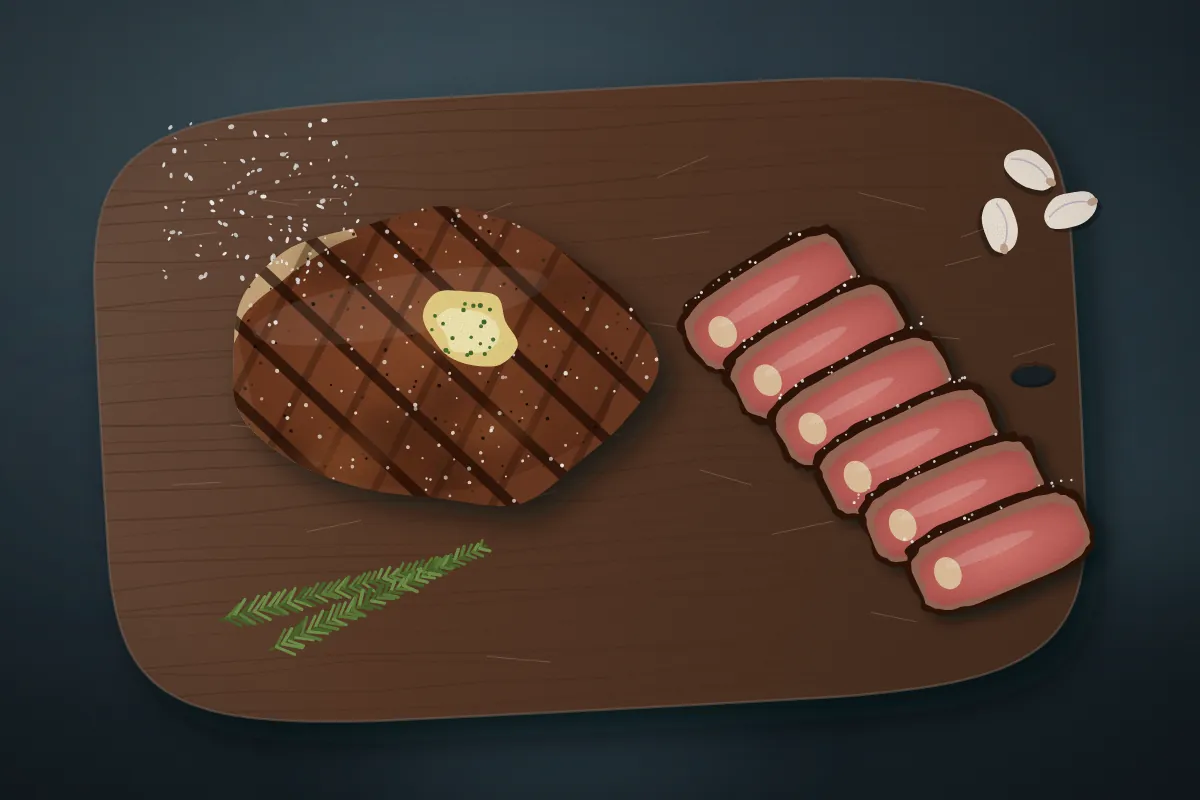
The reverse sear flips the usual order. You cook the steak gently first, then sear it at the very end. The result is pink from edge to edge with barely any gray band, and a dark, crackling crust.
It works best with thick steaks, 1½ to 2 inches. Thin steaks cook through before they get a chance to take on smoke.
Why this recipe works
- Slow, even heat makes the doneness uniform through the whole steak.
- A dry surface from the low cook browns faster and harder in the sear.
- Smoke adds flavor you can't get from a pan alone.
What it costs
September 2026 prices- Choice ribeye, 2.5 lb at $16.50/lb$41.25
- Butter, garlic and herbs$2.00
- Fuel, about 1.25 hr at $0.75/hr$0.94
- Total for the batch$44.19
- Home-smoked, per serving$11.05
Estimates from U.S. average and major-retailer prices; yours will vary. How we calculate.
Recipe
Step by step
Dry brine
Season the steaks with the kosher salt and refrigerate uncovered on a rack overnight, or for at least 1 hour.
Smoke low
Add the pepper and smoke at 225°F until the center reads 115–120°F for medium-rare, about 40–60 minutes.
Get the sear ready
Heat a cast-iron skillet until it smokes, or bring a grill to 500°F or hotter.
Sear
Sear 60–90 seconds per side. In the last minute add the butter, garlic and rosemary and spoon the foaming butter over the steaks.
Rest and slice
Rest 5–10 minutes. The steaks will finish around 130–135°F. Slice against the grain and sprinkle with flaky salt.
Pitmaster tips
Cut your own steaks
A whole boneless ribeye roast costs less per pound than cut steaks. Slice it into 1½-inch steaks and freeze them in pairs.
Use a thermometer
With the reverse sear, a few degrees make the difference between medium-rare and medium.
Choice is plenty
A well-marbled USDA Choice ribeye cooked this way rivals a Prime steak at a much lower price.
Refrigerate leftover steak within 2 hours for 3–4 days. Slice thin and warm gently so it doesn't overcook.
USDA safe minimum internal temperatures: 165°F for poultry, 160°F for ground meat, and 145°F with a 3-minute rest for whole cuts of beef and pork and for fish. Use a thermometer, and refrigerate leftovers within 2 hours.
Reverse-Seared Ribeye FAQ
What temperature should I pull a steak for medium-rare?
Pull at 115–120°F before searing; it finishes at 130–135°F after the sear and rest. USDA recommends 145°F with a 3-minute rest for whole cuts of beef.
Do I need a smoker for a reverse sear?
No. Any grill set up with one side hot and one side cool works, and so does a 225°F oven followed by a skillet sear.
Is reverse sear worth it for thin steaks?
Not really. Under about 1¼ inches, a hot, fast sear is simpler and gives better results.