Texas-Style Smoked Brisket
How to smoke a whole packer brisket Texas-style: salt-and-pepper rub, 250°F, butcher-paper wrap and a long rest. Step-by-step with times, temps and cost per serving.
- Cook
- 10–14 hr
- Pit
- 250°F
- Done at
- 200–205°F and probe-tender
- Makes
- 14 ½-lb servings
- Wood
- Post oak, or oak with a little hickory
- Cost
- $7.61 per ½-lb serving
Central Texas brisket is simple on paper: salt, coarse black pepper, oak smoke and time. The hard part is patience. A whole packer brisket has two muscles, the lean flat and the fatty point, and they cook at different speeds, so you cook to feel instead of the clock.
This method smokes at 250°F, wraps in butcher paper once the bark is set, and rests for at least an hour. It works on pellet grills, offsets, kamados and bullet smokers.
Why this recipe works
- Salt and coarse pepper build a crunchy, dark bark without burning sugar.
- Butcher paper pushes through the stall but breathes, so the bark stays firm.
- A long, warm rest lets the juices settle and the fat stay soft.
What it costs
September 2026 prices- Prime packer, 14 lb at $6.68/lb$93.52
- Seasoning, spritz and butcher paper$4.00
- Fuel, about 12 hr at $0.75/hr$9.00
- Total for the batch$106.52
- ½ lb at a mid-range BBQ restaurant ($28/lb)$14.00
- Home-smoked, per ½-lb serving$7.61
You keep $6.39 (45%) per ½-lb serving. Estimates from U.S. average and major-retailer prices; yours will vary. How we calculate.
Recipe
Step by step
Pick and trim the brisket
Choose a packer with a flat that bends easily when you hold it in the middle. Trim the hard fat from the underside, thin the fat cap to about ¼ inch, and round off thin edges so they don't burn. Keep the trimmings for tallow.
Season
Mix the salt, pepper and garlic. Season every side evenly until you see only a little meat through the rub. Let it sit while the smoker heats, or refrigerate uncovered overnight for a deeper seasoning.
Light a clean fire
Bring the smoker to 250°F and wait until the smoke runs thin and blue. Thick white smoke tastes bitter. Add wood chunks or splits as your smoker needs them.
Smoke
Put the brisket on the grate with the point toward the hottest side and insert a probe into the thickest part of the flat. Close the lid and leave it alone for the first 3 hours while the bark sets.
Spritz as it dries
After about 3 hours, spritz any dry-looking spots every 45–60 minutes. Keep the lid open for as short a time as possible.
Wrap through the stall
Somewhere around 160–175°F the temperature will stall for hours as moisture evaporates. When the bark is a deep mahogany and doesn't come off when you scratch it, wrap tightly in butcher paper (brush on a little tallow first if you like) and return it to the smoker.
Cook to tender
Start checking around 195°F. The brisket is done when a probe slides into the flat like it's going into soft butter, usually between 200°F and 205°F. Feel beats any single number.
Rest
Rest the brisket in its paper for at least 1 hour, or up to 4 hours wrapped in towels in a dry cooler. Keep it above 140°F if the rest runs long.
Slice
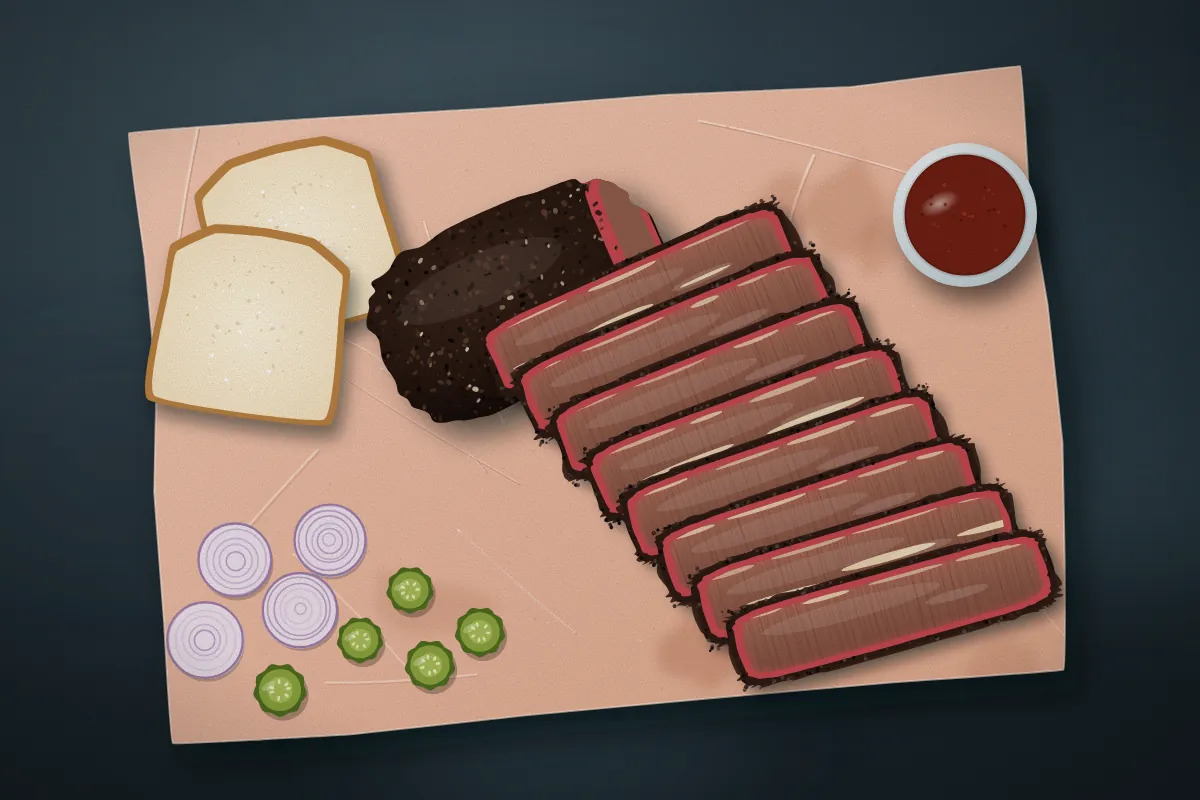
Separate the point from the flat along the fat seam. Slice the flat against the grain about as thick as a pencil. Turn the point 90 degrees and slice it a little thicker, or cube it for burnt ends.
Pitmaster tips
Buy by the bend
A floppy flat usually means more marbling. A stiff flat that won't bend often cooks up dry.
Plan backward
Expect roughly 1–1¼ hours per pound at 250°F, then add 2 hours of cushion. An early brisket rests happily in a cooler; a late one ruins dinner.
Render the trimmings
Simmer the trimmed fat slowly for tallow. It replaces butter or oil for searing all week, and brushed on the paper it keeps the bark moist.
Refrigerate leftovers within 2 hours. Unsliced chunks keep 3–4 days in the fridge and about 3 months vacuum-sealed in the freezer. Reheat sealed portions in 160°F water, or wrap slices in foil with a spoonful of broth and warm at 250°F.
USDA safe minimum internal temperatures: 165°F for poultry, 160°F for ground meat, and 145°F with a 3-minute rest for whole cuts of beef and pork and for fish. Use a thermometer, and refrigerate leftovers within 2 hours.
Texas-Style Brisket FAQ
How long does it take to smoke a brisket at 250°F?
Plan on about 1 to 1¼ hours per pound, so 12–16 hours for a 12–14 lb packer, plus at least 1 hour to rest. Every brisket is different, so cook until it's probe-tender rather than to a set time.
Should I wrap brisket in butcher paper or foil?
Butcher paper keeps a firmer bark because it lets some steam escape. Foil speeds the cook more but softens the bark. Paper is the Texas standard.
Why is my brisket dry?
Usually it was pulled too early (not yet tender), rested too briefly, or sliced with the grain. A flat that won't bend when raw is also more likely to dry out.