How to Smoke Meat: The Complete Beginner's Guide
Everything you need for your first great smoke: how to build a clean fire, which wood goes with which meat, the temperatures and times that matter, what the stall is, and how to rest and slice like a pitmaster.
What smoking is (and why it works)
Smoking means cooking with indirect heat at a low temperature, usually 225–275°F, in the presence of wood smoke. Grilling puts food right over hot coals or burners at 400°F and up, which is perfect for steaks and burgers. Smoking is for the cuts that would be tough if you grilled them.
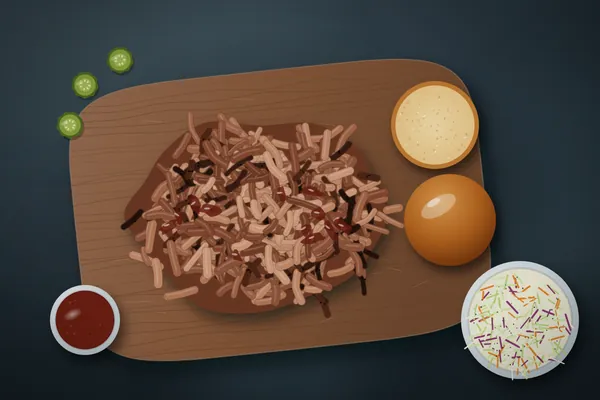
Brisket, pork shoulder, ribs and chuck are full of collagen, the connective tissue that makes meat chewy. Held for hours between roughly 160°F and 205°F, collagen melts into gelatin, and the meat turns tender and juicy. Meanwhile the surface dries, browns and takes on smoke, forming the dark, flavorful crust called bark.
That's also why smoking saves money: the cuts that need low-and-slow cooking are the cheapest ones in the meat case. Pork butt and whole chickens cost a fraction of steaks or boneless breasts, and time does the work that a higher price would.
Your first cook should be a pork butt. It's cheap, forgiving and very hard to ruin. Save brisket for your third or fourth smoke.
Build a clean fire: chase thin blue smoke
The most important skill in smoking is managing the fire so it produces clean smoke. Look at your stack or vent. You want a faint, almost invisible wisp with a bluish tint. That's thin blue smoke, and it comes from wood burning hot and efficiently.
Thick, white, billowing smoke means the fire is smoldering without enough oxygen. It deposits bitter creosote on your food and can make it taste like an ashtray. When you see it, open the intake vents, add a hot coal or let a new split catch fully before closing the lid.
How to get clean smoke on any cooker
- Preheat fully. Let the smoker run at temperature for 20–45 minutes before the meat goes on, until the smoke clears.
- Control heat with the intake, not the exhaust. Keep the top vent or stack at least half open so smoke can leave.
- Use chunks, not soaked chips. Soaking wood only makes steam and smolder. On charcoal, a few fist-sized chunks are plenty.
- Burn dry, seasoned hardwood. Green or damp wood smokes heavily. Never use softwoods like pine, or treated, painted or scrap lumber.
- Pellet grills: keep pellets dry and the firepot clean. If you want more smoke flavor, cook the first hours at 180–225°F, when most pellet grills make the most smoke.
Two charcoal setups every beginner should know
The Minion method (bullet and drum smokers): fill the charcoal ring with unlit coals, then pour a small batch of lit coals on top. The fire spreads slowly downward for 8–12+ hours.
The snake method (kettles): arrange a C-shaped row of briquettes two wide and two high around the edge of the grate, with wood chunks along it, and light one end. It burns slowly around the ring and holds 225–275°F for five to six hours.
Wood pairing chart
Different woods give different flavors. There are no hard rules, but these pairings are a reliable starting point. Oak and hickory are the safe all-rounders; fruitwoods are mild and sweet; mesquite is powerful and best in small amounts.
| Wood | Flavor | Strength | Best with | Note |
|---|---|---|---|---|
| Oak | Medium, clean, classic smoke | Medium | Brisket, beef, almost anything | The Texas standard and the best base wood |
| Hickory | Strong, savory, bacon-like | Strong | Pork, ribs, beef | Turns bitter if you use too much |
| Cherry | Mild, fruity, rich color | Mild to medium | Ribs, poultry, pork | Gives a deep mahogany bark |
| Apple | Mild, sweet, fruity | Mild | Poultry, pork, fish | Slow to build flavor; great in blends |
| Pecan | Rich, nutty, sweet | Medium | Poultry, pork, brisket | A milder cousin of hickory |
| Mesquite | Intense, earthy | Very strong | Steaks, fast grilling | Use sparingly on long smokes |
| Maple | Mild, subtly sweet | Mild | Poultry, vegetables, cheese | Good for delicate foods |
| Alder | Very mild, delicate | Mild | Salmon and other fish | A Pacific Northwest tradition |
| Peach | Mild, sweet | Mild | Pork, poultry | Often cheap or free from orchards |
Smoking temperature and time chart
Times are estimates for a smoker holding steady temperature. Thickness, fat, humidity, wind and how often you open the lid all change the clock, so always cook to internal temperature and feel. Our smoking time calculator turns these numbers into a start time for your cook.
| Meat | Pit temperature | Pull at (internal) | Approximate time |
|---|---|---|---|
| Brisket (whole packer) | 225–275°F | 200–205°F, probe-tender | 1–1½ hr per lb |
| Pork butt (shoulder) | 225–275°F | 195–203°F | 1¼–2 hr per lb |
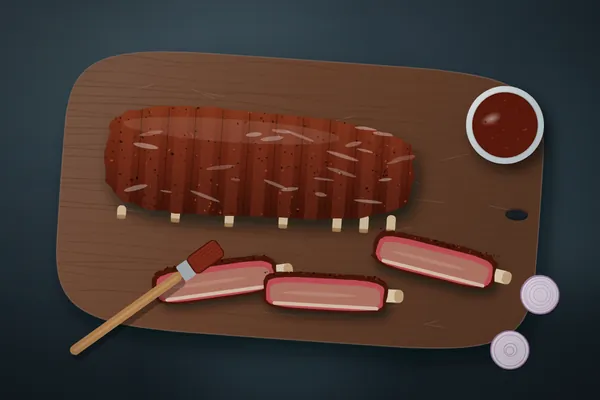
| Spare ribs | 225–250°F | 195–203°F, bend test | 5–6 hr |
| Baby back ribs | 225–250°F | 195–203°F, bend test | 4–5 hr |
| Beef plate short ribs | 250–275°F | 200–205°F | 7–10 hr |
| Chuck roast | 250–275°F | 200–205°F | 1¼–1½ hr per lb |
| Whole chicken (spatchcocked) | 300–350°F | 165°F breast, 175°F+ thigh | 1¼–1¾ hr |
| Chicken wings | 250°F, then 425°F | 175–185°F | About 1¼ hr |
| Chicken thighs (bone-in) | 275–300°F | 175–185°F | 1½–2 hr |
| Whole turkey (12 lb) | 275–325°F | 165°F in the breast | 3–7 hr |
| Salmon fillet | 180–225°F | 145°F | 1–3 hr |
| Ribeye (reverse sear) | 225°F, then sear | 130–135°F medium-rare (USDA: 145°F) | 45–60 min |
| Beef jerky | 170–180°F | Dry but pliable, meat above 160°F | 4–6 hr |
| Fresh sausages | 225–250°F | 160°F (165°F for poultry) | 1½–2½ hr |
The stall, and when to wrap
Every first-time brisket cook has the same scare. The internal temperature climbs steadily for hours, then stops somewhere between 150°F and 170°F and doesn't move for two, three, sometimes five hours. This is the stall, and nothing is wrong.
It happens because the meat is sweating. Moisture evaporating from the surface cools it, the same way sweat cools you, and for a while that cooling matches the heat coming in. Once enough surface moisture is gone, the temperature starts rising again.
You have three choices:
- Wait it out. Leave it unwrapped for the firmest, crustiest bark. Budget the extra hours.
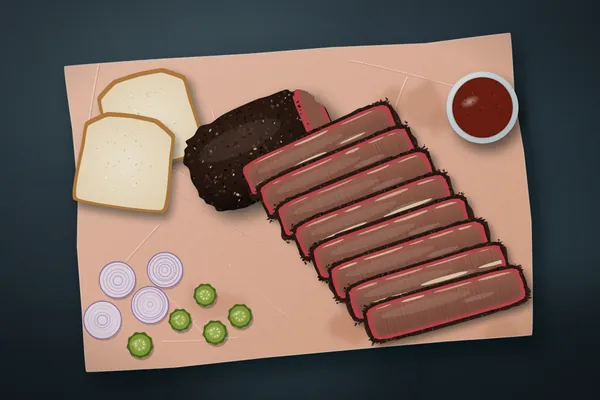
- Wrap in butcher paper. Unwaxed pink butcher paper traps some moisture but still breathes, so you push through the stall faster and keep good bark. This is the Texas standard for brisket.
- Wrap in foil (the "Texas crutch"). Foil is fastest and keeps the meat juiciest, but the trapped steam softens the bark. Great for ribs and pork butt; many cooks crisp the bark by unwrapping for the last 30 minutes.
Whatever you choose, wrap only after the bark has set: it should be dark and shouldn't come off when you scratch it lightly.
Spritzing, mopping and water pans
A light spritz of apple cider vinegar, apple juice or water every 45–60 minutes after the first few hours helps smoke stick, keeps thin edges from drying and evens out the color of the bark. Don't overdo it: every time you open the lid, heat escapes and the cook slows.
A water pan (standard in bullet smokers) adds humidity and acts as a heat sink that smooths out temperature swings. On a kettle or kamado, a small pan of water under the meat does the same job and catches drippings.
Resting, holding and slicing
Resting is part of the cook. Pulling a brisket straight from the smoker and slicing it lets juice run all over the board. Wrapped and rested for at least an hour, the juices settle back into the meat and the fat stays soft.
To hold for longer, wrap the meat in its paper or foil, then in old towels, and put it in a dry cooler. It will stay above 140°F for 3–4 hours. Many pitmasters rest brisket for 2 hours or more on purpose.
Always slice against the grain. Look at the direction the muscle fibers run and cut across them. Brisket has two muscles with grains running in different directions, so separate the point from the flat and slice each one on its own.
Food safety for smokers
Low-and-slow cooking is safe when you follow a few rules. These are the U.S. Department of Agriculture's safe minimum internal temperatures:
- Poultry (whole or ground): 165°F
- Ground beef, pork and lamb: 160°F
- Whole cuts of beef, pork, lamb and veal (steaks, chops, roasts): 145°F, then rest 3 minutes
- Fish and shellfish: 145°F
Bacteria grow fastest between 40°F and 140°F, the "danger zone." Keep raw meat cold until it goes on the smoker, don't leave cooked food out for more than 2 hours (1 hour above 90°F outside), and refrigerate leftovers promptly. Smoke can turn meat pink near the surface even when it's fully cooked, so trust your thermometer, not the color.
Cold smoking (under about 90°F) doesn't cook food. It's used for cheese, salt and cured products like lox, and it needs curing salts and careful technique. Every recipe on this site uses hot smoking.
Source: USDA FSIS safe minimum internal temperature chart.
10 beginner smoking mistakes to avoid
- Putting meat on too early. Wait for a stable temperature and clean smoke.
- Trusting the lid thermometer. Measure at grate level with a probe; lid dials are often 25°F or more off.
- Opening the lid constantly. "If you're looking, you're not cooking." Each peek adds minutes.
- Too much wood. Smoke is a seasoning. A few chunks go a long way.
- Choking the fire. A starved fire makes bitter white smoke. Keep the exhaust open.
- Cooking to time instead of temperature and feel. Use times to plan, not to decide when food is done.
- Panicking in the stall. Don't crank the heat. Wait or wrap.
- Skipping the rest. It's the easiest way to make brisket and pork juicier.
- Slicing with the grain. It makes tender meat chewy.
- Starting with brisket. Learn your cooker on pork butt, chicken and ribs first.
Smoking glossary
- Bark
- The dark, flavorful crust that forms on smoked meat as the rub, fat and smoke dry and brown on the surface.
- Smoke ring
- The pink band just under the surface of smoked meat. It forms when gases in smoke react with the meat's pigment. It looks great but doesn't add flavor.
- The stall
- A long plateau, usually between 150°F and 170°F, when evaporation cools the meat as fast as the smoker heats it.
- Texas crutch
- Wrapping meat in foil or butcher paper to push through the stall faster.
- Packer
- A whole, untrimmed brisket with both the point and the flat.
- Point and flat
- The two muscles of a brisket. The flat is lean and slices neatly; the point is fatty and ideal for burnt ends.
- Probe-tender
- When a thermometer probe slides into the meat with almost no resistance. The real sign that brisket and pork butt are done.
- Bend test
- Lifting a rack of ribs from one end with tongs. When it bends to nearly 90 degrees and the surface cracks, the ribs are done.
- Pellicle
- A tacky, dry skin that forms on fish or meat left uncovered in the fridge. It helps smoke stick.
- Minion method
- Lighting a small batch of coals on top of a full ring of unlit charcoal for a slow, long burn.
- Snake method
- A C-shaped row of briquettes around a kettle's edge, lit at one end, for five to six hours of low heat.
- Thin blue smoke
- The faint, bluish smoke from a clean, efficient fire. The goal on every cook.
- PID controller
- A smart temperature controller used in many pellet grills that makes small, constant adjustments to hold temperature tightly.
- Spritz
- A light spray of liquid (vinegar, juice or water) that keeps the surface from drying and helps color the bark.
- Hold
- Keeping cooked meat wrapped and warm, often in a dry cooler, for hours before serving.
Smoking FAQ
What temperature should I smoke meat at?
225–275°F for most cuts, including brisket, pork butt and ribs. Poultry is better at 300–350°F so the skin crisps. Fish is best low, around 180–225°F.
How much wood should I use?
On a charcoal smoker, two to four fist-sized chunks are usually enough for a long cook. Smoke is a seasoning: most absorption happens in the first few hours, while the meat is cold and moist.
Should I soak wood chips?
No. Soaked wood has to dry before it burns, so it steams and smolders, making dirty smoke. Use dry chunks on charcoal, and dry chips only in a gas grill smoker box.
What is the smoke ring and does it matter?
The smoke ring is the pink layer under the bark, caused by gases in smoke reacting with the meat's pigment. It looks impressive but doesn't change the flavor, and it isn't a sign of undercooked meat.
Can I smoke meat on a regular grill?
Yes. Set up two zones: coals or lit burners on one side, meat on the other. Add wood chunks to the coals (or chips in a smoker box on gas), close the lid, and control the temperature with the vents or burner knobs.